
Agriculture remains one of the most resilient and profitable sectors, but long-term success depends on adapting to change, mitigating risks, and optimizing resources. I’ve worked with investors and farm owners who underestimated shifting market trends, climate challenges, and the rapid adoption of technology. The reality is that agriculture isn’t static—those who prepare for future challenges are the ones who thrive. Whether investing in farmland, agribusiness, or sustainable farming, securing financial stability, leveraging technology, and implementing efficient management strategies can ensure a profitable and sustainable future.
1. Embrace Technology for Higher Efficiency
Technology is changing the way farms operate, and those who integrate AI, precision agriculture, and automation see increased efficiency and profitability. I’ve worked with farmers who transitioned from manual labor to sensor-driven monitoring, and the results speak for themselves—lower costs, reduced waste, and better yields.
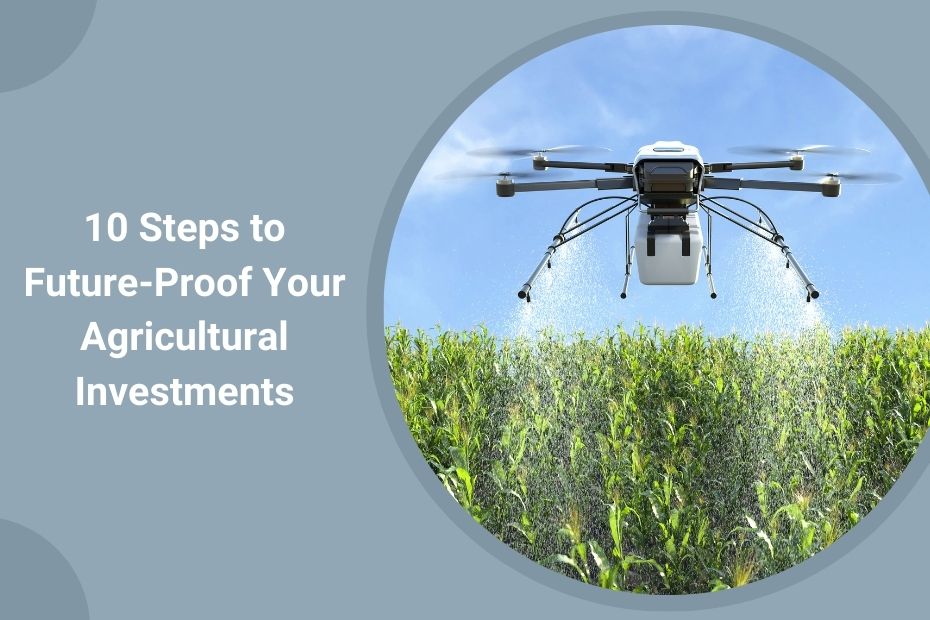
Drones now scan fields for pests and disease, allowing early intervention, while AI-powered irrigation systems adjust water usage based on real-time moisture data. Smart greenhouses automate temperature and humidity control, maximizing growth conditions. The key is to stay updated with technological advancements and implement them gradually to improve efficiency without overwhelming operations.
2. Adopt Sustainable Farming Practices
Sustainability is no longer optional—it’s a necessity for long-term productivity and profitability. Soil degradation, water shortages, and environmental regulations are forcing farms to shift toward conservation-driven approaches.
Cover cropping, no-till farming, and crop rotation prevent soil depletion, while drip irrigation reduces water waste. Farms using organic fertilizers and biological pest control see lower chemical input costs while maintaining high yields. Some investors are shifting toward regenerative agriculture, which restores soil health while improving carbon sequestration. These methods preserve farmland value while ensuring future productivity.
3. Diversify Agricultural Investments
Relying on a single crop, market, or revenue stream is one of the riskiest approaches in agriculture. I’ve seen farms suffer because they depended entirely on one commodity, only to be hit by price drops or climate disruptions.
Smart investors diversify by integrating multiple income streams. This can include:
- Mixing crop production with livestock farming to spread risks.
- Exploring agritourism opportunities like farm stays or organic markets.
- Investing in renewable energy projects, such as solar farms or biogas production, to generate additional income.
Spreading investments across different agricultural sectors helps cushion against market volatility and secures more stable returns.
4. Monitor Market Trends and Consumer Preferences
Agriculture isn’t just about producing food—it’s about meeting market demand. Farmers and investors who pay attention to emerging consumer preferences often gain a competitive advantage.
The demand for organic, locally grown, and plant-based products continues to rise. Some agribusinesses are shifting toward specialty crops and alternative proteins to align with changing dietary habits. Technology also plays a role—farms investing in direct-to-consumer sales through digital platforms are increasing profit margins by eliminating middlemen.
Understanding global trade policies, pricing trends, and supply chain shifts ensures that investments remain aligned with high-demand markets.
5. Develop a Strong Business Plan
A well-structured business plan isn’t just paperwork—it’s a blueprint for sustainable investment. I’ve seen well-funded farms struggle because they lacked clear financial strategies and risk assessments.
An agricultural investment plan should cover:
- Projected revenue and expense forecasts.
- Risk management strategies, including insurance and diversification.
- Expansion plans for scaling operations.
- Backup strategies in case of market downturns or environmental challenges.
Farmers and investors who plan ahead and track key performance indicators are better equipped to handle market fluctuations and unexpected disruptions.
6. Invest in Education and Skill Development
Agriculture is evolving, and staying competitive requires continuous learning. I’ve worked with investors who took agriculture courses, attended trade shows, and engaged with local farming cooperatives to improve decision-making.
Workshops on precision agriculture, soil health, and sustainable farming provide practical knowledge to optimize operations and maximize profitability. Some farmers also train employees in new technologies, ensuring smooth transitions when implementing innovations.
Being informed about new regulations, farming techniques, and economic shifts gives investors the tools needed to make smarter agricultural decisions.
7. Strengthen Local and Global Partnerships
Farming isn’t a solo venture—building relationships with local suppliers, cooperatives, and agribusiness networks can expand opportunities and lower costs. I’ve seen farms that struggled alone succeed after forming partnerships with distributors, retailers, and research institutions.
Joint ventures with seed companies, agri-tech startups, and commodity buyers can secure better pricing and access to innovation. Cooperative farming models, where small-scale farmers share equipment and resources, help lower operational expenses.
Global markets also present export opportunities. Establishing trade relationships with buyers in international markets can help diversify revenue streams beyond local demand.
8. Adapt to Environmental and Climate Challenges
Climate patterns are less predictable, and agricultural investors need proactive strategies to reduce risks and ensure consistent yields. I’ve seen farms mitigate losses by implementing climate-smart technologies like:
- Drought-resistant crop varieties for water-scarce regions.
- Automated irrigation systems that conserve water.
- Windbreaks and cover crops to protect soil from erosion.
Farmers also use AI-powered climate prediction tools to plan optimal planting and harvesting times, reducing exposure to extreme weather events. Preparing for climate risks improves resilience and investment stability.
9. Implement Smart Financial Management
Poor financial planning can turn a profitable farm into a liability. Investors who track income, expenses, and market trends are better positioned to make profitable decisions.
Using farm management software simplifies budgeting, expense tracking, and sales forecasting. Some investors also leverage tax incentives, grants, and government subsidies to lower operational costs.
Access to agriculture-specific insurance and financing options ensures that unexpected losses don’t cripple investments. Proper financial oversight protects against debt accumulation and cash flow shortages.
10. Secure a Succession Plan for Long-Term Stability
Agricultural investments shouldn’t end with one generation. Without a clear succession plan, farms risk operational disruptions and financial instability. I’ve seen successful farms struggle because ownership transitions were never planned.
Having legal agreements, estate planning, and leadership training in place ensures that farms continue to operate smoothly. Some investors train successors in farm management, while others appoint experienced managers to oversee operations if heirs aren’t involved.
A well-structured transition plan preserves investment value and prevents legal disputes.
Future-Proofing Agricultural Investments
- Adopt smart technology for efficiency.
- Use sustainable farming to protect resources.
- Diversify revenue streams to reduce risks.
- Monitor market trends for better decisions.
- Plan finances carefully to ensure stability.
- Prepare for climate risks with adaptive strategies.
In Conclusion
Agriculture is changing, and future-proofing investments requires a forward-thinking approach. Farms that leverage technology, improve sustainability, diversify revenue, and plan for long-term risks remain profitable and resilient. Investors who stay informed, build strong networks, and prioritize smart financial management position themselves for long-term success in a competitive industry. With the right strategies, agricultural investments can generate stable returns for years to come.
“For more strategies on future-proofing your agricultural investments, follow my insights on Crunchbase and YouTube, where I discuss the latest trends shaping the future of farming and agribusiness.”

Dax Cooke is the founder of Farmfolio, a Medellín-based agribusiness and farmland development company. With 10+ years across capital markets and agribusiness, he builds sustainable, cash-flowing farmland projects and export supply chains (coconut, lime, teak, avocado). A three-time NAIFA 40 Under 40 honoree, his career began at Citigroup’s Capital Markets.