
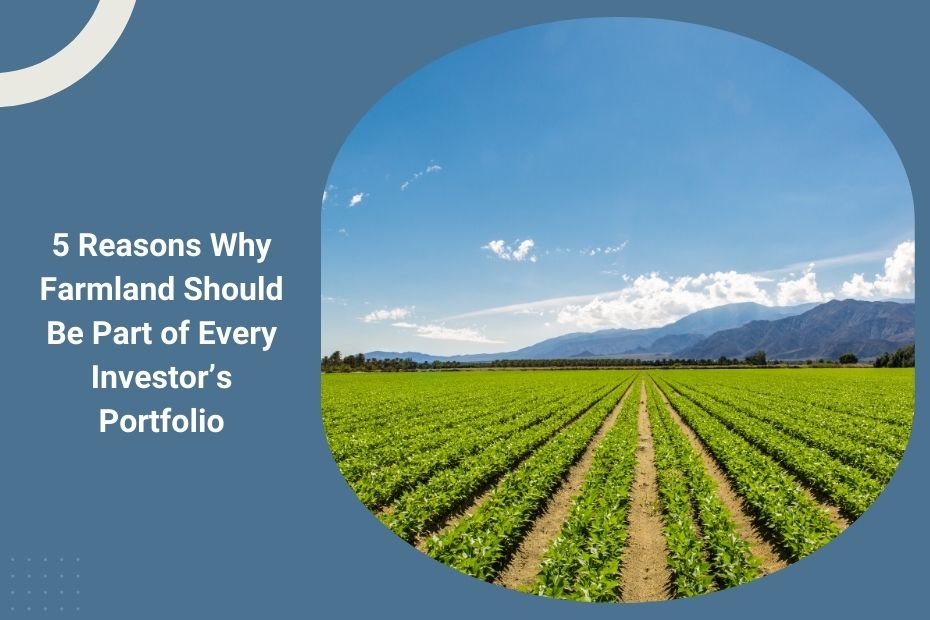
Farmland has been one of the most consistent and reliable investments for generations, yet many investors overlook it in favor of stocks, bonds, or real estate. That’s a mistake. I’ve seen firsthand how farmland provides stable returns, passive income, and a hedge against inflation—all while remaining largely insulated from market volatility. With a growing global population and increasing demand for food, agricultural land is only becoming more valuable. It’s an asset that appreciates over time and generates steady income, making it an essential part of a well-rounded investment portfolio.
1. Farmland Consistently Appreciates in Value
Unlike stocks and real estate, which can experience dramatic price swings, farmland has shown steady, long-term appreciation. The key reason? Land is limited, but the demand for food keeps increasing. That supply-and-demand equation makes farmland a scarce and valuable asset.
Over the past several decades, farmland values have steadily climbed, even during economic downturns. I’ve watched farmland outperform commercial real estate and residential properties in terms of price stability. During the 2008 financial crisis, while housing markets crashed, farmland prices held firm. Institutional investors took notice, and today, hedge funds and pension funds are pouring billions into agricultural land, knowing its value will only rise over time.
2. Farmland is a Proven Inflation Hedge
Inflation eats away at the value of cash and erodes returns on many traditional investments. Farmland, however, benefits from inflation. When the cost of goods and services rises, so does the price of agricultural commodities like wheat, corn, and soybeans. Since farmland produces these essential crops, its value and rental income typically rise alongside inflation.
Historically, farmland has kept pace with or outperformed inflation, making it an ideal way to preserve purchasing power. That’s why more investors are shifting capital into farmland—because it provides a hedge that stocks and bonds simply can’t match in inflationary periods.
3. Farmland Generates Passive Income
One of the most appealing aspects of farmland is its ability to generate consistent passive income. Investors don’t need to farm the land themselves—most lease it to experienced farmers under cash rent agreements or crop-share contracts. These lease agreements provide stable annual income, often exceeding the rental yields of traditional real estate.
Beyond leasing to farmers, there are alternative income streams as well. Many landowners lease sections of their farms for solar or wind energy projects, further increasing revenue. Some investors even explore agribusiness partnerships, where they share profits from crop production or organic farming ventures. The bottom line? Farmland doesn’t just appreciate—it pays you while it does.
4. Farmland Diversifies and Stabilizes a Portfolio
Smart investors know that diversification is the key to managing risk. Farmland has a low correlation with stock markets, meaning its value isn’t directly tied to Wall Street fluctuations. While stocks and bonds react to interest rate hikes, economic downturns, and geopolitical tensions, farmland operates on an entirely different cycle—one based on food demand, commodity prices, and land availability.
When financial markets struggle, farmland has historically remained steady or even appreciated. I’ve seen investors turn to agricultural real estate as a safe haven during recessions. By adding farmland to a portfolio, investors reduce their exposure to market volatility and create a more balanced investment strategy.
5. Farmland Comes with Significant Tax Benefits
Farmland ownership isn’t just profitable—it’s also tax-efficient. Many investors don’t realize that agricultural land qualifies for tax incentives and deductions that other real estate assets don’t.
- Lower property taxes: In many areas, farmland is taxed at a lower rate than residential or commercial properties.
- Mortgage interest deductions: Investors financing farmland purchases can often deduct mortgage interest expenses.
- Government incentives: Some farmland owners qualify for conservation easements, grants, or subsidies if they implement sustainable farming practices or renewable energy projects.
These tax advantages add another layer of financial benefit that makes farmland an even more attractive investment.
Key Reasons to Invest in Farmland
- Steady appreciation: Farmland increases in value consistently over time.
- Inflation hedge: Agricultural commodities and land values rise with inflation.
- Reliable passive income: Lease agreements generate stable returns.
- Portfolio diversification: Low correlation with stocks and bonds reduces investment risk.
- Tax advantages: Agricultural land qualifies for deductions and incentives.
In Conclusion
Farmland isn’t just an alternative investment—it’s a fundamental asset that has generated wealth for centuries. As food demand increases and land availability shrinks, farmland’s value will only continue to rise. Investors looking for a stable, income-generating, inflation-resistant asset should strongly consider adding farmland to their portfolios. With the added benefits of tax advantages, diversification, and consistent growth, farmland stands out as one of the smartest long-term investments available today.

Dax Cooke is the founder of Farmfolio, a Medellín-based agribusiness and farmland development company. With 10+ years across capital markets and agribusiness, he builds sustainable, cash-flowing farmland projects and export supply chains (coconut, lime, teak, avocado). A three-time NAIFA 40 Under 40 honoree, his career began at Citigroup’s Capital Markets.