
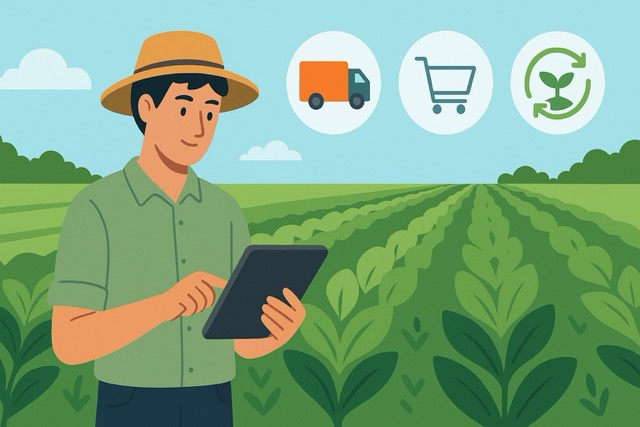
The agribusiness world is shifting faster than ever, and if you’re not adapting, you’re risking stagnation. Today’s market rewards flexibility, tech adoption, and customer proximity—and you’re in a better position than most to make that work. With new tools, smarter financing, direct-to-consumer opportunities, and climate-conscious practices, you can reshape how your agricultural operation grows and stays profitable. This article walks you through the most relevant new business models in agribusiness and gives you practical ways to use them in your own work—no fluff, just real-world strategies that help you connect the field to the final sale.
Integrating Digital Tools into Daily Operations
Smart farming isn’t a gimmick anymore. You now have access to platforms and devices that let you monitor soil conditions, automate irrigation, or even run yield simulations before a single seed hits the ground. Companies are using AI to model ideal crop rotation plans and forecast disease risk. Tools like CropX and Climate FieldView have become essential for larger growers and accessible for smaller operations. If you’re serious about improving margins and reducing waste, digital platforms aren’t optional—they’re your next best hire.
With these systems, you’re not guessing. You’re reacting in real time, which means fewer input costs, better output, and more predictable cash flow. Some tech companies even offer subscription models, allowing you to scale digital solutions as your acreage grows.
Shifting Toward Regenerative Models That Last
You’re seeing more pressure from consumers and buyers to adopt sustainable farming techniques—and there’s a reason. Retailers and food manufacturers want supply chains that are transparent and environmentally responsible. If you apply cover crops, rotate fields properly, and reduce tillage, you’re not just doing good—you’re meeting demand. Walmart and General Mills are already incentivizing farmers who use regenerative practices with premium contracts and long-term sourcing deals.
On your end, it also means long-term health for your soil and potentially less need for synthetic inputs. That’s a win for your budget and your land. Certifications like USDA Organic or Regenerative Organic Certified can help you fetch higher prices in certain markets without changing your entire operation overnight.
Redesigning the Supply Chain Around Efficiency
There’s no reason your harvest should take three different hands and two weeks to get to a shelf. Shortening the supply chain saves you money, lowers spoilage, and lets you talk directly to the buyer. You can work with local distributors or even coordinate micro-fulfillment using cold storage co-ops or regional ag hubs. This helps you stabilize income and gives you leverage when negotiating with buyers or retailers.
If you produce specialty goods—organic vegetables, artisan grains, heirloom fruit—you can offer fast local delivery or even weekly harvest boxes. That direct connection doesn’t just improve your margin. It builds loyalty.
Selling Direct Through E-Commerce
E-commerce isn’t just for physical goods anymore. Agricultural products—from raw produce to shelf-ready food—are now being sold directly to consumers online. If you’ve ever thought about diversifying revenue, this is one of the simplest ways to test it. Whether through Shopify, Amazon’s local food division, or specialized ag platforms, you can list products and start taking orders with minimal overhead.
Even if you’re not shipping nationwide, offering a digital storefront for bulk buyers, restaurants, or even subscription programs gives you better control over pricing and logistics. Platforms like Barn2Door or GrazeCart cater specifically to farmers and ranchers, providing templates and tools that don’t require a tech background.
Exploring Better Ways to Fund Growth
Access to capital has historically been a barrier in agribusiness, especially if you’re independent or transitioning to organic practices. Now, you have more ways to secure funding. Impact lenders and rural-focused funds are actively seeking partnerships with sustainable farms. Companies like Steward and AgAmerica offer alternative funding options where repayment terms align with crop cycles.
Some programs tie funding to performance benchmarks—improving soil carbon levels, expanding cover crop usage, or reducing runoff. This gives you flexibility with capital while also pushing your operation in a profitable direction. In some cases, you may also find value chain actors like food processors or cooperatives offering shared investment models to upgrade infrastructure or adopt new tech.
Using Data as a Competitive Edge
You’re already collecting data—on yields, rainfall, seed performance, machinery uptime. The question is: are you using it to make better decisions? Smart agribusinesses today don’t guess how next season might go—they compare models, track input efficiency, and plan for risk using real-time dashboards.
Software tools like Granular, Trimble Ag Software, or AgriWebb can show you which plots are draining resources and which ones are ripe for investment. Having this data ready also improves your access to funding, especially when applying for loans or sustainability-linked credits. You’re showing your operation is backed by metrics, not just market hope.
Partnering Across the Value Chain
You don’t have to do everything alone. New business models in agribusiness are built around collaboration—joint ventures with processors, co-marketing with retailers, or co-investments with equipment manufacturers. These partnerships aren’t just for big players. Regional processors are eager to lock in reliable suppliers, especially as weather patterns and logistics become less predictable.
Programs like Field to Market and USDA Value-Added Producer Grants encourage this kind of cooperation. You can create more stability by aligning with partners who help you access technology, streamline logistics, or tap into new markets.
What New Business Models Are Driving Agribusiness Growth?
- Direct-to-consumer e-commerce platforms
- Regenerative agriculture with premium sourcing
- Farm-to-retail short supply chains
- Digital tech and data-driven operations
- Sustainable finance tied to performance benchmarks
In Conclusion
If you’re running an agribusiness today, you’re not just a grower—you’re a strategist. Your ability to adapt will define whether you just survive or build something that thrives. By leaning into tech, building smarter supply chains, selling directly, securing the right funding, and forging key partnerships, you give yourself the flexibility and resilience modern agriculture demands. The tools are there. The demand is growing. What’s left is execution.
For more of my insights and analysis on the evolving landscape of agribusiness, follow me on Medium.

Dax Cooke is the founder of Farmfolio, a Medellín-based agribusiness and farmland development company. With 10+ years across capital markets and agribusiness, he builds sustainable, cash-flowing farmland projects and export supply chains (coconut, lime, teak, avocado). A three-time NAIFA 40 Under 40 honoree, his career began at Citigroup’s Capital Markets.