
You’ve likely heard “regenerative” tossed around in food marketing—but unlike “organic,” it’s not just a label. It refers to a method focused on restoring the ecosystem while growing food profitably.
This article shows you exactly what regenerative agriculture is, how it differs from organics, why brands and producers are investing in it, and how you can evaluate its real-world relevance for your farm, food brand, or investment. Each section addresses questions real users are asking, backed by field-level examples and performance metrics.
What Is Regenerative Agriculture and How Is It Defined?
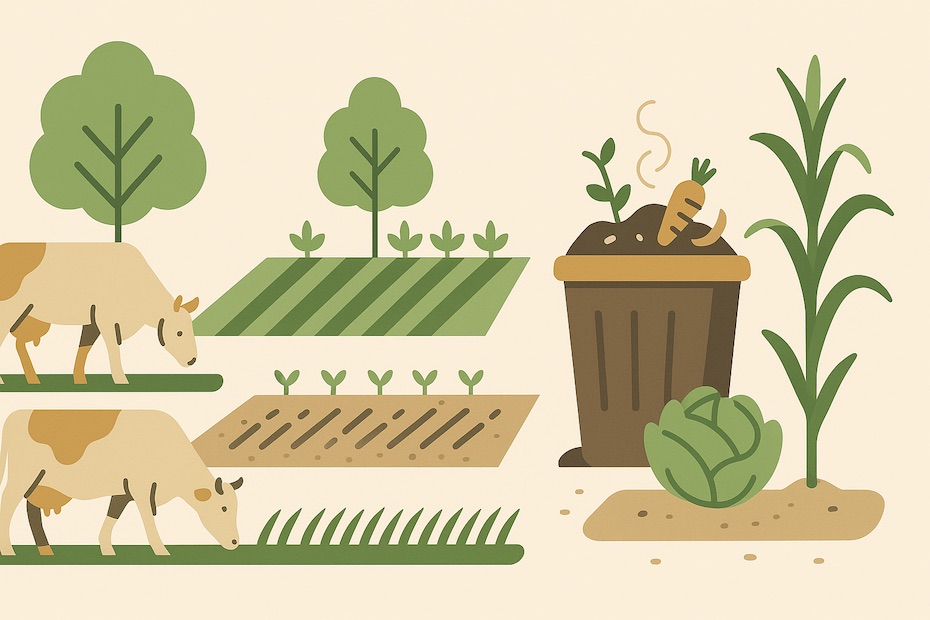
Regenerative agriculture is a system of practices aimed at improving soil health, increasing biodiversity, and enhancing farm resilience. While organic farming focuses on avoiding synthetic inputs, regenerative goes further by actively rebuilding degraded soils and ecosystems.
There is no global regulatory definition of “regenerative,” which means farms and brands may interpret the term differently. However, core practices often include no-till planting, cover cropping, crop rotation, compost use, and livestock integration. The goal is to create self-sustaining systems that restore land function and reduce dependency on external inputs.
Why Are Food Brands Pushing the Regenerative Label?
Consumer pressure on sustainability has forced brands to look beyond carbon neutrality and into measurable land stewardship. Regenerative agriculture offers a compelling narrative for food companies aiming to showcase environmental commitment.
Major players like General Mills, Nestlé, and Danone have invested in regenerative pilots to improve soil health, reduce supply-chain emissions, and build long-term resilience. Patagonia Provisions and Applegate now feature regenerative products with story-based marketing. In many cases, brands are creating their own scorecards or frameworks since third-party standards remain inconsistent.
How Does Regenerative Differ From Organic Certification?
Organic farming is governed by national standards—like USDA Organic or EU Organic—which prohibit synthetic pesticides, GMOs, and most chemical fertilizers. Regenerative agriculture does not inherently exclude these but focuses instead on ecological outcomes.
You can have regenerative systems that are not certified organic and vice versa. Regenerative Organic Certification (ROC), however, merges both: it requires USDA organic compliance as a baseline and adds regenerative soil-building and social fairness criteria. Yet ROC is still emerging and not universally adopted.
Are There Proven Benefits of Regenerative Practices?
Yes. Regenerative practices deliver both ecological and economic benefits when implemented correctly. Studies show improvements in water retention, soil structure, pest resistance, and long-term yield stability.
In a 2024 report by SLM Partners, regenerative ranches in Australia reported higher profitability per hectare due to reduced feed and veterinary costs. In the U.S., carbon credit programs and eco-conscious buyers are creating income streams for verified regenerative practices. Farmers in India under regenerative cotton programs earned 15–20% more due to lower input costs and better soil productivity.
Here’s what you can measure over time:
- Increased organic matter in soil, improving water retention
- Reduced need for synthetic fertilizers and pesticides
- Resilience against drought, heat, and floods
- Enhanced biodiversity from diversified planting
- Lower operational costs with higher system efficiency
Is There Real Consumer Demand for Regeneratively Labeled Food?
Demand is growing—but not at the same level as organic. Most consumers still don’t fully understand the term “regenerative,” and only niche markets are willing to pay a premium without third-party certification.
That said, surveys in 2023 by FMI and The Hartman Group revealed that over 60% of shoppers care about soil health and carbon emissions once educated. Foodservice buyers—especially institutional and sustainability-driven restaurants—are emerging as stronger adopters than retail chains. As awareness increases, so will pricing power.
What Are the Risks of Adopting Regenerative Farming?
Regenerative transitions require upfront investment. Costs include new equipment, training, potential yield dips during early years, and verification programs. Without a premium buyer or policy incentive, many farms struggle to justify the switch alone.
The lack of regulatory clarity also means anyone can market “regenerative” without standardized auditing, which dilutes credibility. As of 2024, industry leaders are pushing for definitions and scorecards aligned to soil carbon, biodiversity, and input reduction—but consistency remains a work in progress.
How Can You Verify Regenerative Outcomes on Your Farm?
To build trust and capture premiums, you must measure and report. Digital tools like Regrow, MySoil, and Soilmentor now allow you to track cover cropping, tillage intensity, soil carbon levels, and rotation diversity through satellite and mobile data.
Regenerative Organic Certification and Land to Market’s Ecological Outcome Verification (EOV) are two leading platforms offering outcomes-based validation. Buyers increasingly expect third-party data to back claims—whether for marketing or to issue carbon-linked payments.
What Is the Role of Government and Policy?
Governments are beginning to support regenerative through pilot subsidies and carbon markets. In the U.S., the USDA’s Partnerships for Climate-Smart Commodities funnels billions into regenerative pilot projects. In the EU, regenerative techniques are promoted under CAP “eco-schemes.”
India’s Andhra Pradesh Natural Farming Initiative is one of the world’s largest regenerative farming rollouts, covering 6 million farmers. These programs often reward verified soil improvements, biodiversity enhancements, or reductions in nitrogen runoff, rather than the farming label alone.
What is regenerative agriculture in food production?
Regenerative agriculture restores soil health using no-till, cover crops, crop diversity, and compost—enhancing ecosystem function while maintaining food production.
In Conclusion
“Regenerative” may be today’s food marketing trend, but when applied with precision, it delivers measurable ecological and business returns. The term lacks strict regulation, so your focus must stay on trackable outcomes and credible systems. As markets mature and verification becomes standardized, regenerative practices offer a high-performance path to long-term land stewardship and profitability in food systems.
To see how regenerative strategies intersect with food innovation, sustainability, and capital, visit the Crunchbase profile behind this perspective. The future of food isn’t just grown—it’s designed.

Dax Cooke is the founder of Farmfolio, a Medellín-based agribusiness and farmland development company. With 10+ years across capital markets and agribusiness, he builds sustainable, cash-flowing farmland projects and export supply chains (coconut, lime, teak, avocado). A three-time NAIFA 40 Under 40 honoree, his career began at Citigroup’s Capital Markets.