
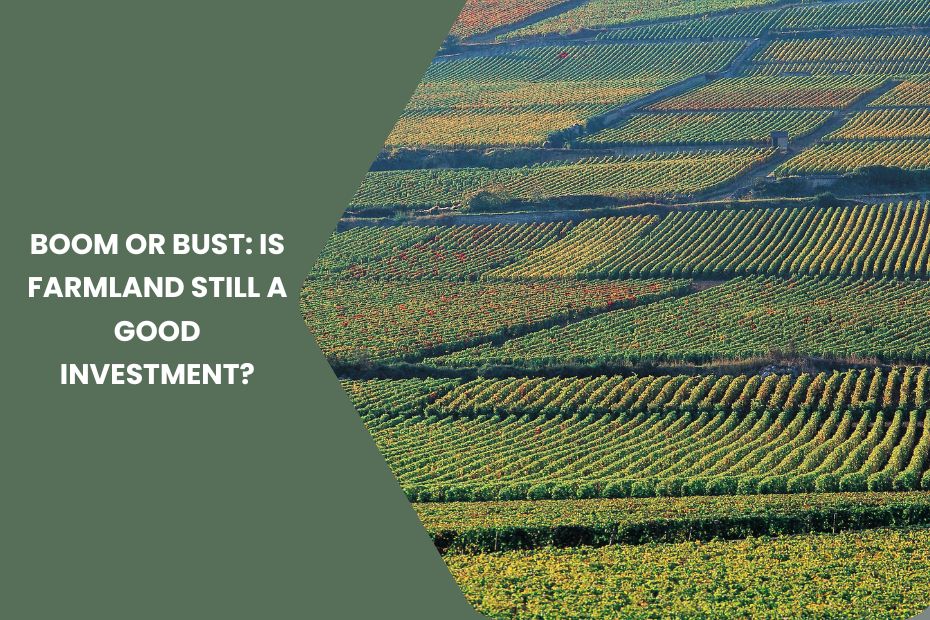
Farmland has always had a reputation for being a stable and dependable investment, especially when markets get bumpy. You’ve probably heard it described as “gold with yield” because it produces income and appreciates over time. But with interest rates climbing, global trade shifting, and commodity markets turning volatile, you’re right to ask whether farmland still holds its weight in a modern portfolio. In this article, I’ll break down the current trends, financial returns, risks, and strategic options around farmland investment—so you can decide if this asset class still fits your goals.
The Real Story Behind Farmland Prices
You can’t evaluate farmland as an investment without understanding how land values have changed recently. Over the past few years, values have climbed steadily, especially in high-production areas like the Midwest and Central Valley. In 2024, the U.S. Department of Agriculture reported a 5% increase in total farm real estate values. Cropland rose 4.7%, and pastureland went up 5.2%. That’s strong growth, but it’s slower than what we saw coming out of 2020–2022.
The momentum cooled due to rising interest rates and tighter credit. That directly affects what buyers can afford—and what sellers can demand. If you’re planning to finance a land purchase, those higher borrowing costs cut into your return. On the other hand, cash buyers are in a stronger position right now. Still, farmland values haven’t fallen. That stability tells you something about the long-term confidence in the asset.
How Farmland Delivers Financial Returns
You’re not buying farmland for quick flips. It pays off in three ways: lease income, operating profits, and appreciation. If you lease it to a farmer, you’re looking at an annual return of about 3% to 5%, depending on location and soil quality. If you operate the land yourself—whether growing row crops, nuts, fruits, or specialty products—you can see annual returns from 4% to 10%, assuming good management and market conditions.
Then there’s appreciation. Historically, farmland has appreciated by 5% to 6% per year. That’s not explosive, but it adds up—and it’s tied to factors like commodity demand, population growth, and limited land supply. Unlike commercial real estate, farmland doesn’t depreciate from obsolescence. In fact, if managed properly, it gets better over time. You improve the soil, water infrastructure, and productivity—and that boosts value and rent potential.
Comparing Farmland to Stocks and Bonds
When you compare farmland to other asset classes, its value really starts to show. Stocks and bonds are tied closely to interest rates, corporate earnings, and economic cycles. Farmland, on the other hand, tends to move independently of those markets. That makes it a smart way to diversify. It doesn’t mean your entire portfolio should be farmland—but adding 5% to 15% of your holdings in agriculture can smooth out returns when everything else is swinging.
During inflationary periods, farmland holds up particularly well. When food prices go up, land values often follow. That’s a built-in hedge that bonds and cash can’t match. And unlike physical gold, which just sits there, farmland produces revenue while it appreciates. It’s a tangible asset with utility. You can lease it, grow on it, or hold it for value—all without worrying about daily market headlines.
What Can Affect Farmland Investment Performance
No investment is without variables. Farmland’s performance depends on several major factors, and you should stay sharp on all of them. Start with commodity pricing. If corn, wheat, or soybeans drop, it cuts into operating returns. That affects rental rates and investor sentiment. Right now, you’re dealing with international competition, shifts in trade policy, and even changes in consumer demand (plant-based proteins are pushing pulses and legumes forward, for example).
Interest rates also matter. Higher rates reduce affordability for buyers and increase the cost of financing operations. You’ll see some pressure on prices in the short term when financing gets expensive. Then there are government programs—subsidies, crop insurance, conservation incentives. These can buffer returns, especially during low-yield years, but they’re subject to change with political cycles.
Finally, you’ve got weather and climate to think about. Farmland isn’t immune to drought, flooding, or pest pressure. You can reduce risk with diversification—across crops, locations, or farming systems—but you still need to factor climate risk into your due diligence.
Know the Risks Before You Commit
If you’re looking at farmland as a passive income play, you might be tempted to see only the upside. But there are risks you need to weigh. The biggest is liquidity. Unlike stocks or mutual funds, farmland can’t be sold with a click. Transactions take time, and buyers may not line up the moment you decide to sell. That’s why you should treat farmland as a long-term hold.
Operational risk is another issue. If you’re farming the land yourself, you’re dealing with input costs, labor management, machinery maintenance, and market uncertainty. Even leasing comes with risks—tenant default, property damage, or land mismanagement that affects future productivity. You’ll need to vet your lease agreements carefully and monitor the land regularly.
Then there’s regulatory risk. Water rights, pesticide rules, labor laws—all of these can shift depending on where you’re buying. If you’re not familiar with the legal side of owning and operating farmland, it’s worth bringing in professionals who are.
Investing Without Buying a Tractor
Not everyone wants to manage land directly, and that’s fine. You’ve got other options. One popular route is farmland REITs. Publicly traded companies like Farmland Partners Inc. (FPI) and Gladstone Land Corp. (LAND) give you exposure to agricultural land without owning it. You buy shares and receive dividend income based on rental returns and appreciation. It’s easy to buy and sell, and you can do it from your brokerage account.
Another route is farmland investment funds. These are private vehicles that pool money from multiple investors and use it to buy and manage large tracts of farmland. The fund managers handle operations and reporting. Minimum investments can vary widely—some start at $25,000, others at $250,000. But you get professional oversight and exposure to a broader portfolio than you could manage alone.
Crowdfunding platforms also exist now for farmland, where you can invest in specific properties with as little as $10,000. Platforms like AcreTrader and FarmTogether give you access to vetted deals, and while it’s not as liquid as a REIT, you get direct exposure and clear reporting. These tools are making farmland investing more accessible without watering down the value.
Is Farmland a Good Investment?
- Long-term appreciation around 5–6%
- Stable income through leases or operations
- Low correlation with stock markets
- Strong hedge against inflation
- Multiple entry options: REITs, funds, direct
In Conclusion
If you’re looking for a long-term asset that generates income, builds equity, and keeps its cool when markets panic, farmland still earns its place in the conversation. It’s not flashy or fast-moving, but it’s one of the few asset classes that produces something people actually need—food. Whether you want to buy a farm, lease it out, or invest through a REIT or fund, the opportunity is there. Just go in with your eyes open, do your due diligence, and think long-term. Farmland won’t make headlines every day, but it can quietly build wealth if you treat it right.
Want to explore more investment insights like this? Follow along at Pinterest for resources, ideas, and thought leadership on real assets and long-term strategies.

Dax Cooke is the founder of Farmfolio, a Medellín-based agribusiness and farmland development company. With 10+ years across capital markets and agribusiness, he builds sustainable, cash-flowing farmland projects and export supply chains (coconut, lime, teak, avocado). A three-time NAIFA 40 Under 40 honoree, his career began at Citigroup’s Capital Markets.