
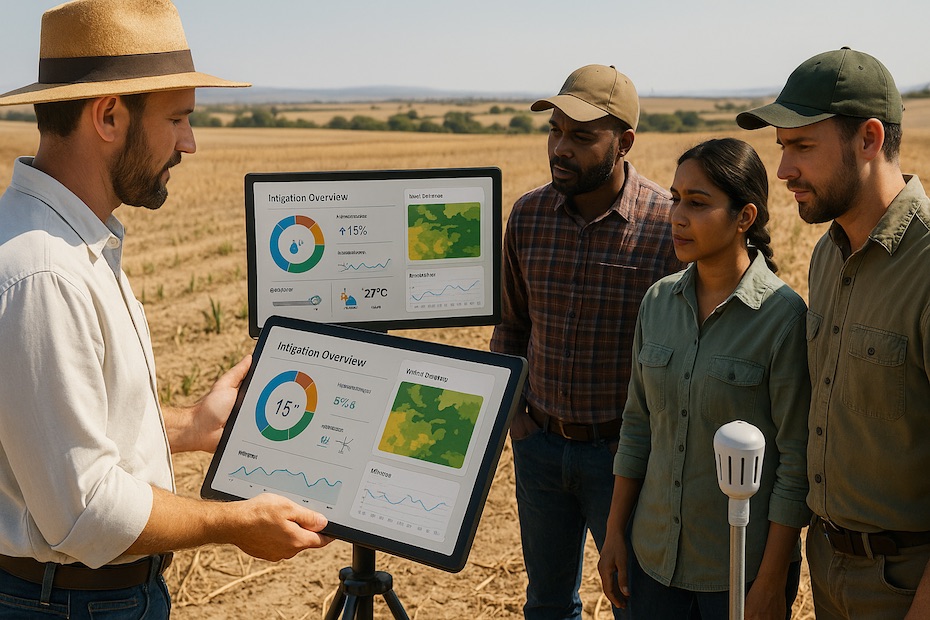
Water scarcity doesn’t mean your productivity has to drop. As a grower, you’ve seen how unpredictable rainfall and dwindling freshwater access can limit your farm’s potential. But with the right methods, you can shift from reactive to proactive. Water-wise agriculture isn’t about compromise—it’s about control. You’ll use smarter irrigation, adapt your crop choices, and improve your soil’s ability to hold every drop. This article gives you proven strategies to help your farm succeed with less water—backed by real-world results and practical tools.
Choose Crops That Match Your Climate
When your water budget shrinks, crop selection becomes a strategic decision. You want crops that deliver solid yields without demanding heavy irrigation. Drought-tolerant varieties—like millet, pigeon pea, or cowpea—perform well under dryland conditions and often improve soil health at the same time. In India’s Karnataka region, 3,000 farmers switched from cotton and soybean to millet and legumes. They cut their input costs by 12%, reduced crop loss, and saw harvests become more reliable during erratic monsoon seasons.
If you grow rice, you can save a significant amount of water without changing crops. The System of Rice Intensification (SRI) has shown success across Asia and Africa. With SRI, you reduce planting density, irrigate intermittently, and use compost to enrich soil. That’s led to yield increases of 40–100% in some trials, while cutting water use nearly in half. By adjusting spacing and water timing, you stretch your supply without hurting output.
Apply Precision Irrigation Where It Matters
Irrigation isn’t about volume—it’s about timing and accuracy. When you implement drip or micro-sprinkler systems, you’re not just distributing water; you’re delivering it to the zone where roots can use it best. Research across Sub-Saharan Africa showed that switching from surface irrigation to drip irrigation doubled yields in crops like tomato and onion, while using 30–50% less water. You’re not just saving water—you’re feeding your crops more efficiently.
You can take it further by integrating digital tools. Soil moisture sensors, evapotranspiration data, and weather forecasts now feed AI-powered irrigation controllers. These systems water your fields only when needed, adjusting for crop stage, temperature, and humidity. Studies show that combining AI with drip systems reduces water use by 20–25% and increases yields up to 30%. If you manage hundreds of acres or more, automation becomes your edge in staying profitable while preserving groundwater.
Explore Deficit Irrigation for Strategic Crops
Deficit irrigation flips the traditional approach. Instead of watering based on crop ideal needs, you intentionally withhold water at less sensitive stages to stretch your supply. That may sound risky, but it works. In Turkey and India, researchers demonstrated that wheat and cotton grown under deficit irrigation maintained stable yields while using up to 60% less water. It’s not about starving your crops—it’s about choosing timing wisely.
Success here depends on your knowledge of the crop’s growth cycle. Some stages, like grain filling in wheat or flowering in cotton, are too sensitive to skimp on. But others, like vegetative growth, can tolerate a short drought without harming final output. If you already keep track of crop development stages, integrating deficit irrigation into your schedule won’t require a complete overhaul—just some planning and maybe a few sensors for added precision.
Use Alternate Wetting and Drying for Rice Fields
Flooded rice fields consume more water than most systems. But alternate wetting and drying (AWD) helps you cut water use while improving conditions for both crop and soil. With AWD, you allow the field to dry to a certain level before re-flooding. This practice saves about 38% of water and lowers methane emissions, all while maintaining typical yields.
Farmers across Southeast Asia are adopting AWD with support from irrigation authorities. In Bangladesh and the Philippines, AWD is integrated into national irrigation policies. You’ll need a simple field water tube to monitor depth, and a willingness to skip the habit of constant flooding. Once implemented, this method also shortens harvest time because the soil dries more quickly—reducing labor costs and improving machine efficiency.
Boost Soil’s Water-Holding Power
You can’t save water if your soil can’t hold it. Soil structure plays a critical role in how effectively your crops absorb moisture. Practices like no-till farming, cover cropping, and adding organic matter all help increase water retention. In areas with dry summers, planting ryegrass or legumes as cover crops has been shown to boost soil sponge effect and reduce surface runoff during rain events.
Another trick is mulching. Plastic mulches are common in high-value vegetable crops, but natural options—like straw or compost—also reduce evaporation. A recent innovation uses superhydrophobic sand as a top layer to retain water while allowing gas exchange. Trials in desert conditions showed wheat and tomato yields increasing by 17–73% under these mulching techniques. Improving your soil is one of the most cost-effective ways to make every drop count.
Add Water-Retaining Amendments
Hydrogels are another tool that helps sandy or degraded soils hold onto water. These polymers absorb and slowly release moisture near plant roots. In dry regions of Africa and the Middle East, adding hydrogels increased plant biomass and yield, even with less frequent irrigation. Some hydrogels are biodegradable or starch-based, addressing past concerns about soil contamination.
These products work best when mixed into root zones before planting. They’re especially helpful in sandy soils, which naturally lose water quickly. Hydrogels won’t replace irrigation, but they smooth out dry periods and help crops ride through short-term drought stress. That’s an advantage when rainfall becomes unreliable, or when power cuts interfere with water pumping schedules.
Use Tech to Monitor, Automate, and Adapt
Digital monitoring makes water management simpler. Sensors measure soil moisture, plant stress, air temperature, and even wind speed. You can combine this data on a farm dashboard or mobile app to make irrigation decisions faster and more accurate. In Uganda, researchers piloted a low-cost IoT system that used machine learning and soil sensors to guide irrigation on maize farms. Results showed better crop health and reduced watering time.
Beyond data collection, automation plays a major role. Smart irrigation systems connect to weather stations and field sensors to automate watering across specific zones. You avoid overwatering, reduce runoff, and collect detailed reports. These systems are increasingly affordable, and many manufacturers offer pay-as-you-go models or service bundles to get started. The more you trust your tools, the easier it becomes to manage water efficiently at scale.
Tap Into Support Systems and Conservation Networks
Going water-wise doesn’t mean going it alone. National and regional programs are investing heavily in sustainable water use. In the U.S., the USDA’s WaterSMART Initiative has provided millions in funding to implement smart irrigation, upgrade field infrastructure, and provide training. If you’re looking to make a change, these grants can reduce your out-of-pocket costs and help you scale up quickly.
You can also look locally. Conservation districts, co-ops, and ag tech incubators often offer field trials or pilot programs for drip systems, sensors, and soil health projects. And as weather becomes more extreme, staying connected to these groups means you’ll be first in line for funding or equipment rebates. Making the shift to water-wise agriculture pays dividends, but it starts with knowing what’s available and taking action early.
Top Water-Wise Tactics
- Plant drought-tolerant crops
- Use drip or AI-guided irrigation
- Apply alternate wet/dry rice methods
- Improve soil with cover crops and mulch
- Add hydrogels for moisture retention
In Conclusion
You’re no stranger to pressure—especially when water is tight. But with the right strategies in place, you don’t have to sacrifice yield or quality. Water-wise farming is about using your resources better, not simply using less. When you choose smarter crops, apply precise irrigation, and treat your soil like a reservoir, you build a system that adapts, performs, and lasts. The tools are ready. The methods are proven. And every drop you save puts your farm in a stronger position for the seasons ahead.
If you found this guide helpful, I share more insights on sustainable agriculture over on Tumblr. Drop by for practical tips, case studies, and discussions—let’s grow smarter together.

Dax Cooke is the founder of Farmfolio, a Medellín-based agribusiness and farmland development company. With 10+ years across capital markets and agribusiness, he builds sustainable, cash-flowing farmland projects and export supply chains (coconut, lime, teak, avocado). A three-time NAIFA 40 Under 40 honoree, his career began at Citigroup’s Capital Markets.